Guitar Teaching Poster with Guitar Hero Photos
24" x 36" Poster
On Heavy 100 lb. Gloss Paper $19.95
This site was built for everyone who wants to learn to play guitar. Music is being cut from middle and high school curricula all over this country. This is a crime in my opinion. Music gives kids in any environment an opportunity to learn a true art, and music gives both kids and adults a sense of self worth. Music has been good to me over the years, and I want to pass on a little of what I have learned. I especially encourage young people to learn an instrument: any instrument. I began at age 14 on trumpet and it was the trumpet that gave me an everlasting love of music. It wasn't until age 17 that I got my first guitar.
Cheap is actually not a derogatory word, and the true fact is that no guitar, no matter how expensive or beautiful, will make you or anyone else, a good player. Practice is the only thing that will make you better. A good player can make even a super cheap guitar sing, so don't worry if you can't afford the best guitar in the world. Get whatever guitar you can afford and start learning today. I recommend starting on an acoustic guitar because it will help build the muscles in your hands and forearms.
Use the tips of your fingers to form the chord. Press toward the fret, not in the middle. Strum only the strings designated to be played for each chord. Make sure the strings are firmly pressed against the Frets and that your fingers are not muting adjacent strings. Chording is difficult for nearly everyone at first. You have to train the muscles in your hands and forearms to know these chords so that you can form them without thinking. Practice, Practice, Practice!
Learn a few Open Chords like E Major, A Major, G Major and D Major first, and practice changing between them over and over again until you’re comfortable. Learn some more Open Chords. Then, move on to Barre Chords. Practice!
Lear your Major Scales and then move on the the Minor Scales. Practicing Major and Minor scales, especially with a metronome, is a great way to build strength in your hands and forearms and is also fantastic for your finger dexterity.
Buy a metronome. Practice with your metronome. Set it as slow as necessary for you to play with the beat. Tap your foot with the beat as you play. When you can play comfortably at a slow speed, turn the metronome up a notch. Repeat that procedure, gradually getting faster until you've reached the desired tempo. If you can't play a song or scale slow, then you can't play it fast! Practice, Practice, Practice!
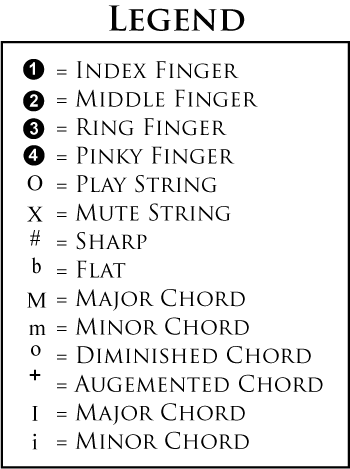
If you practice every day, you will notice your improvement. It is much better to practice for a half and hour a day, every day, than to spend four hours one day per week. The number of hours you spend practicing your scales and chords will directly affect how fast and how well you learn. Use the Legend below for the charts and visual aids used on this site.
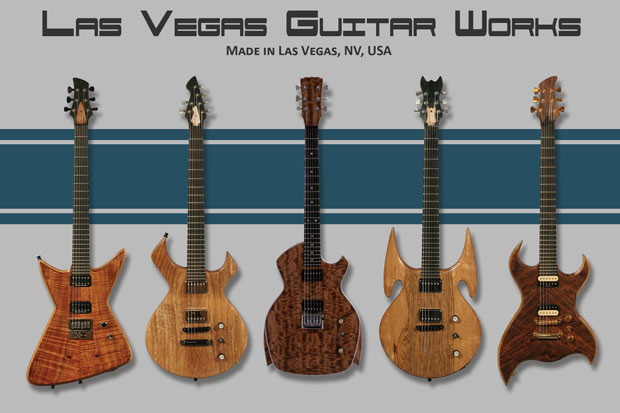
Original Guitars at Las Vegas Guitar Works